Lately two influencers, investor/founder Chamath Palihapitiya and actor/author Matthew McConaughey [1][2] directed their younger selves to take more risk. Their reasoning is that risk has a low cost when you are young and the upside after repeated bets has outstanding outcomes.
As someone that took bets in my youth, one investing time into pioneering youtube content in the dance music scene and another leaving a secure software engineering job to join a blockchain technology startup. Not only have I experienced the risk Chamath and Matthew speak of but I have also witnessed a plethora of people go through their own trials with risk in the crypto startup scene and from living in Cambridge where many take risk by taking on deep research either in the private sector or academia.
The risks I took were based on my own dreams and aspirations. I wanted dance music content to be on par with other genres. Giving the scene legitimacy in online discussions and furthering that into the main stream. I wanted to believe blockchain technology would disrupt the existing centralized paradigms of todays web 2.0 and financial systems.
Before diving in to my reflections on risk I would like to take a closer look on where both Chamath and Matthew are coming from in order to contrast the risk they are likely speaking of vs what I have experienced personally
Chamath was a successful product person at several companies before joining a very early stage company Facebook in 2007 instead of continuing down the path of becoming vice president at the venture capital firm he worked at. Furthermore it seemed that after his gainful exit from Facebook he started a traditional venture capital firm where he would take outside investment including his own to make bets. Several years later he pivoted social capital to a family office perhaps to have more skin in the game with his own direct investments and to spend more time working with his companies than limited partners.
Matthew McConaughey initially rose to prominence in the late 90s as a leading man but eventually played the male love interest in many romcoms in the early 2000s boom. While these roles were successful and consistent the work itself is obviously stagnating for a serious actor. He then abstained from these roles starting in 2008 and took 3 years of no roles until he landed the Lincoln Lawyer in 2011 starting his prolific comeback to impactful roles. He describes in his book Green Lights that it is often best to go on a Yellow light, not to wait when all signals are green before trying something new. He regrets doing rom-coms for too many years. Lastly Matthew has done a lot of public writing in recent years and has said his journaling spans 30 years. It is likely writing was another risk he wanted to take sooner.
One final note before contrasting their risk with other types is that both Chamath and Matthew denied the traditional high-prestige safe industries, finance for Chamath, law for McConaughey. Even without mentioning the additional risks they took, both of their paths were still one standard deviation from the straight and narrow.
What both of our influencers have experienced is victim of one’s own success. An inclination to attempt what is expected and a reluctance to let go of existing success. Both took a risk and dealt with the potential loss of consistent external reward and validation however this is fundamentally a different risk than what a young person would take.
Directionally being risk on, to the utmost degree is sound advice for a driven young person however it is incomplete. Taking risk assumes a baseline skill, optionality, credibility or knowledge of what winning looks like. For someone that has been validated in any field these aspects are clear to obtain. However for someone starting from zero, the calculus is different because without the above foundation the risk loses its asymmetric risk to become blind risk.
Starting from zero? Take more risk
Painting from the scenario of starting from zero it is important to note that there is a difference between asymmetric risk and blind risk. I have been exposed to the latter. Trying something out of my own opinion of how the world should work. In reality one needs to literally interface one’s thoughts and opinions against reality. The key to doing this is matching one’s skill with risk. As one gains knowledge of a field and it’s ecosystem prognosticating where things are headed and ones potential role within it becomes clearer.
For example in software this entails learning technologies and how to build things. This will signal to you what should be built. You then take your newly learned skills and build something externally facing. This gives you compensation and reputation furthering your ability to sustain oneself and connect with other talent, providing another opportunity to level up one’s skills.
For an 18 year old starting from zero a path where risk and skill development is correlated is
- Small Tool/Videogame - Risk : Sharing with a friend or family
- Hackathon Project - Risk : Sharing with strangers
- Internship - Risk : Shipping some value to a commercial company
- Full Time Employee - Risk : Shipping Multiples of value
- Side Project in Startups - Risk : Exposure to Startups
- In depth feature work in Open source - Risk : Exposure to Open source
…
When skill and risk is aligned early in one’s pursuit the signals of what to do and not to do become clear. Meanwhile if an 18 year old went straight to their; feature work on an open source project, one could possibly ship something eventually however due to one’s skill limitations one is implicitly taking on a ton of risk that the skilled person would not. If one is not properly skilled their odds of selecting an increasingly relevant project that is still needing of new active contributors is random.
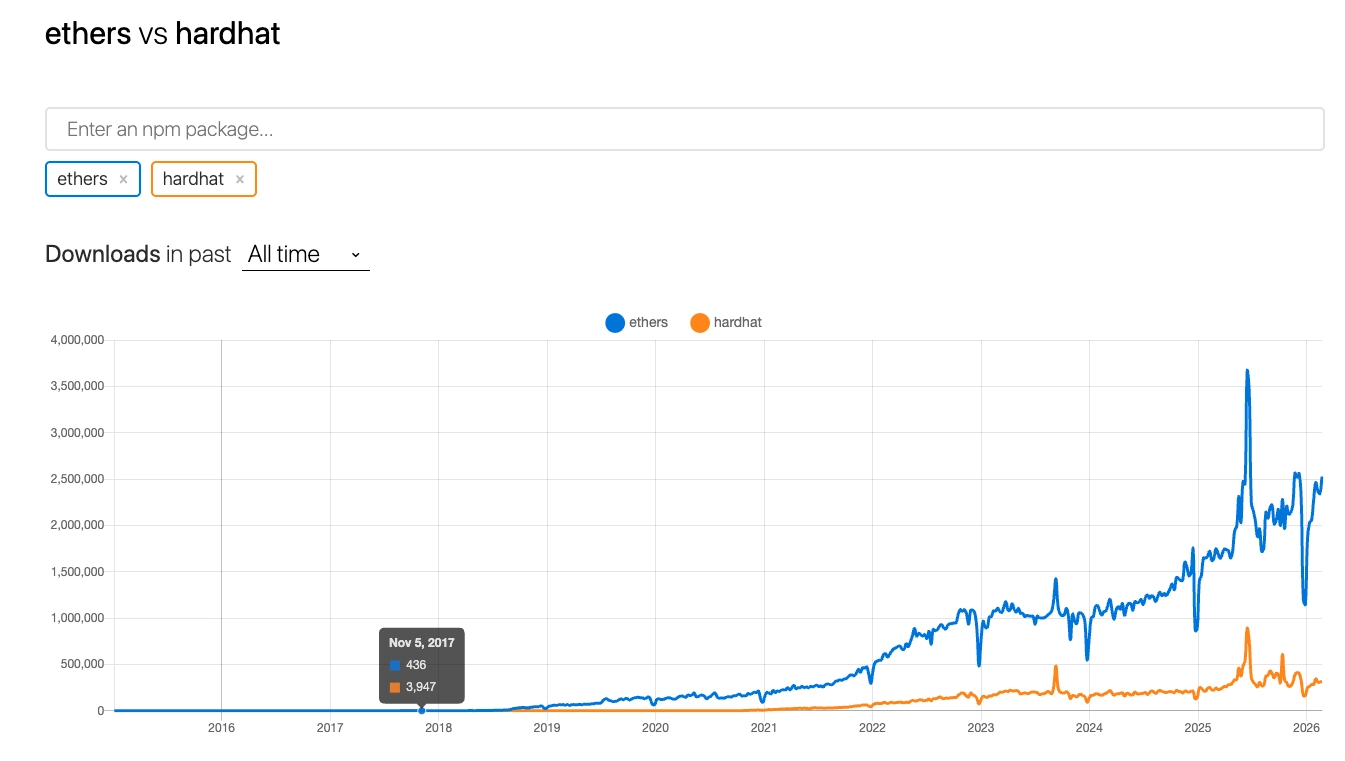
I saw this often in the crypto open source ecosystem. There are many inexperienced devs with enthusiasm and risk appetite however their lack of technical depth makes choosing what to work on really risky. Knowing when to react when there are changes even if one is early overall can only occur when one has base line understanding of the technological and social aspect. I saw many people on the wrong side of an adoption parabola, sinking energy and money into something that the technologists have already moved on from.
The parallel to this in entertainment is too obvious. Go to Los Angeles and you have folks with extreme variance in understanding of the craft and industry. Partially due to the low barrier of entry to attempt this path but also the naivety that many young people taking the risk to chase their dreams of being an actor.
A final note, while pairing skill with risk is appropriate I would still recommend reaching out for moon shot opportunities. Reaching out and sharing what you are doing with people that are way more experienced or further on the risk curve allows you to take advantage of network effects and benefit from others’ tribal knowledge, unique skills and risk. Just don’t be afraid to change your approach once new information is received.
Being externally validated? Take more risk
The latter more directly applies to what Chamath and Matthew experienced. There are common sayings for the issues they faced; competency traps, over confidence bias, etc. One is inclined to initially perceive external validation as internal satisfaction. Meanwhile these two things are often at odds. Society over values your existing contribution to it. American society is really collectivist from a career/professional point of view, it is incentivized to have one cash in their chips the moment they are gained.
In this position risk takes a different meaning. It is a fear of starting from square zero with what you have built so far. Discarding what is no longer useful to one’s happiness and going full steam to what will. Risking when you have something to lose is risk but the tradeoffs are usually more clear than when starting from zero zero.
Take-away
Early in one’s pursuit of a dream, build skills and knowledge to ensure one’s bets are asymmetric. After initial success be willing to risk identity but still look to leverage your existing skills even in a pivot.